Recently, I had the privilege of presenting an Accent Reduction workshop for primarily native-Mandarin-speaking graduate students at a fine academic institution. In my printed opening remarks, I talked about the invisible wall of pronunciation challenges that can sometimes hamper a gifted achiever in the professional world. I then wrote: “You’ve worked hard for your success. You deserve admiration and respect. Clear communication can take you there.” I regret that wording now and can appreciate how hurtful it may have been.
Are people not deserving of admiration and respect no matter where their speech skills lie? Yes, they are. Period. I was responding to feedback I’ve received from talented ELLs (English Language Learners) that native speakers sometimes treat them with patronization and disrespect.
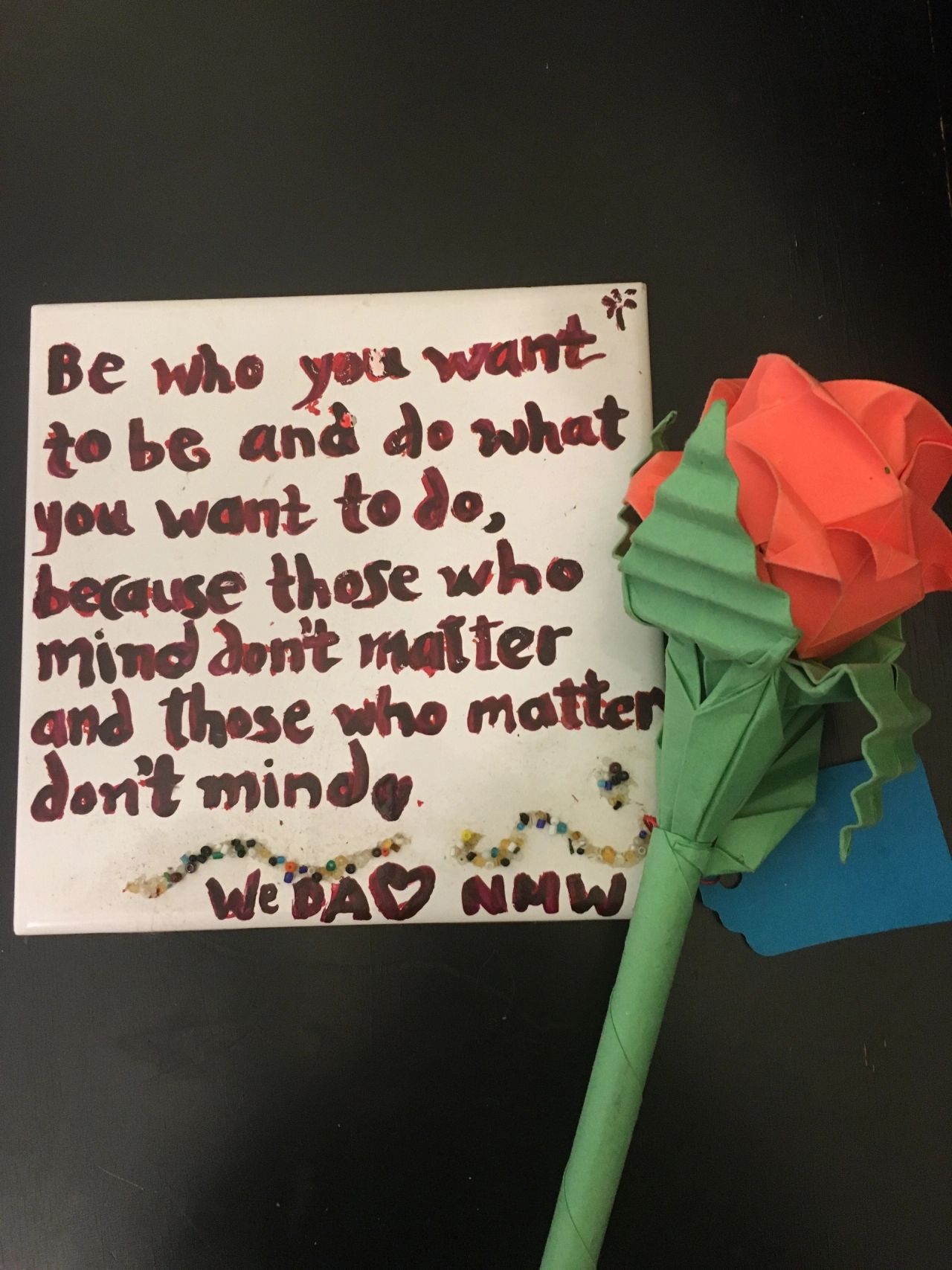
Years ago, I came upon a tile a camper had left behind at summer’s end. It’s carried me through many a challenge. It says, “Be who you want to be and do what you want to do, because those who mind don’t matter and those who matter don’t mind.” To be clear: anyone who confuses a pronunciation learning curve with a person’s intrinsic value or intelligence is losing a valuable opportunity to learn from another’s strengths.
Can clearer English pronunciation bring greater comfort, confidence and efficiency? Of course. No question. Does a person’s speech reflect the time and effort she has invested in her language skills? Yes.
A good determinant of whether a person can benefit from pronunciation coaching is: How many times do you need to repeat yourself? Clear pronunciation will conserve that inconvenience and unnecessary energy expenditure for both speaker and listener. I’m calling the classes I will give to my brilliant workshop-veteran ELLs “The One-Time Club,” because our goal is to eliminate the need to repeat oneself.
The “Final Frontier” (any Trekkies out there?) of language learning is pronunciation. Focus and improvement in this sphere bring great returns. But when an ELL is breaching the chasm between, e.g., Mandarin and American English, they might as well be learning to fly. (Note that Speech Athletes’ logo does feature a high-leaping figure.) In fact, though the learning curve is steep, with focus and skilled instruction, huge gains can and do result! Get ready to soar, people!
One workshop participant expressed his disagreement with the concept that we all need to sound alike. What about cultural pride? Point well taken! Yet, distinctiveness of identity can easily co-exist with a person’s mastery of a second language. A person whose second language sounds native or nearly so is not negating or minimizing his origins. He is simply indicating awareness of the accurate pronunciation of the new language and the capacity to produce it. When we remove value judgments and simply deal with concrete facts, we are free to make choices about our priorities!
English Language Learners have my deepest respect and admiration. They are pioneers who dare to bring all the worth and gifts they have to a brand new environment which will demand extra language study, over and above the development of any other professional faculties. It takes enormous courage and vision to undertake such a project.
By Susanne Katchko, founder of Speech Athletes